
SIHOO
SIHOO M57 Ergonomic Mesh Office Chair, High Back Home Desk Chair with 3D Armrests, Lumbar Support and Adjustable Headrest, Comfortable Computer Chair, Big & Tall Office Chair Hold 330 LBS-Black
Excellent
In stock on Amazon.com
How-To Guide
Owning an adjustable chair only helps if you use the adjustments. This guide walks through each control the Ergo Score looks for, in a sensible order, and says what each one is for so you can set a chair up in a few minutes.
As an Amazon Associate I earn from qualifying purchases. We have not physically tested these chairs; scores come from manufacturer and Amazon specifications.
Top Pick
SIHOO
In stock on Amazon.com
Runner-Up
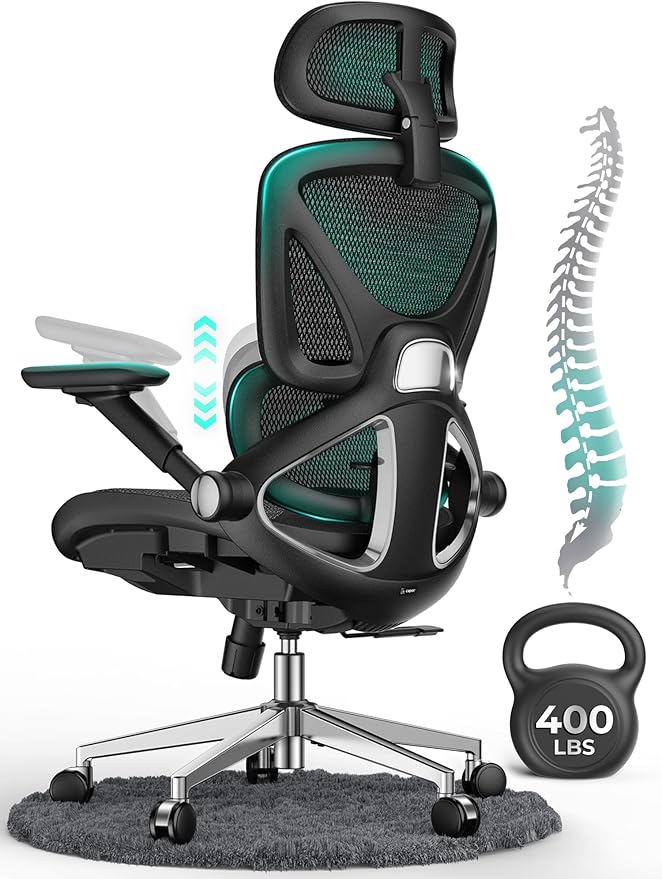
CAPOT
In stock on Amazon.com
Strong Option

ELABEST
In stock on Amazon.com
Amazon.com data updated October 13, 2026, 2:34 pm ET. Price and availability are accurate as of the time indicated and are subject to change. Any price and availability information displayed on Amazon.com at the time of purchase will apply.
The Ergo Score awards up to 40 points to adjustability, spread across armrests, seat height, seat depth, lumbar adjustment, recline, tilt lock, tilt tension and advanced tilt. Those are the controls that let a chair be matched to you.
Ranking uses the back pain list, so every pick states a lumbar support.
Work from the ground up. OSHA's test for seat height is that the whole sole of the foot rests on the floor with the back of the knee slightly higher than the seat. Next comes seat depth, which OSHA says should leave no contact between the back of the knee and the front edge.
After the seat, set the backrest: lumbar height to fit the small of your back, then recline and tension. Finish with armrests, then the screen and keyboard.
OSHA says the backrest should recline at least 15 degrees from vertical and lock in place or be tension adjustable. Cornell University suggests reclining at about 100 to 110 degrees rather than sitting fully upright.
The score reflects this: 2 points for recline to 100 degrees or more, 3 for a stated tilt lock, 3 for adjustable tilt tension, and 4 for an advanced mechanism such as synchro tilt, weight-sensing recline, knee tilt, a flexing back or self-adjusting tilt.
Armrests are optional in OSHA's guidance but should be adjustable: close enough to support the lower arms while the upper arms stay near the body, and low enough to keep the shoulders relaxed. The score gives 10 points for four-way adjustment, 8 for three, 6 for two, 3 for one, 1 for fixed or flip-up and none for no armrests.
Headrest adjustment, in height or angle, earns 2 more points; it matters most if you lean back to read or take calls.
Seat height. The other settings depend on your feet being flat and your knees sitting slightly above the seat, as OSHA describes.
The tilt lines together are worth 10 points because they decide whether you can vary your posture. OSHA's guidance says the backrest should recline and either lock or be tension adjustable.
Not if you never use it. Controls that are hard to reach or understand tend to go unused, so favor the ones you will actually set.
OSHA advises changing position often, including with small chair adjustments. Revisit your settings when you change desks, shoes or tasks.
| # | Chair | Ergo Score | Price | Lumbar support | Lumbar adjustments | Armrests | Buy |
|---|---|---|---|---|---|---|---|
| 1 | $199.99 | 2D | Height, depth | 3D adjustable | Check Price | ||
| 2 | $199.99 | Micro-adjust, aligned to L1-L5 | Height | 4D adjustable | Check Price | ||
| 3 | $349.99 | Yes | Height, depth | 4D adjustable | Check Price | ||
| 4 | $399.99 | Dynamic | Not listed by the seller | 4D adjustable | Check Price | ||
| 5 | $179.99 | Dynamic | Not listed by the seller | 3D adjustable | Check Price | ||
| 6 | $595.00 | Yes | Height | 4D adjustable | Check Price | ||
| 7 | $329.99 | Yes | Height | 3D adjustable | Check Price | ||
| 8 | $199.99 | Dynamic | Not listed by the seller | 3D adjustable | Check Price |
Amazon.com data updated October 13, 2026, 2:34 pm ET. Price and availability are accurate as of the time indicated and are subject to change. Any price and availability information displayed on Amazon.com at the time of purchase will apply.
Chairs are ranked by Ergo Score, computed from manufacturer and Amazon specifications with the same published formula for every chair (how we rate). Specifications and prices come from the Amazon.com listings, checked on October 13, 2026, 2:34 pm ET. We have not physically tested these chairs.
As an Amazon Associate I earn from qualifying purchases. We have not physically tested these chairs; scores come from manufacturer and Amazon specifications.


